
International Ministries
SSS Background
The Sisters of Social Service have been working in California since 1926 when their Californian foundress, Sister Frederica Horvath, began working with the Mexican immigrant community in Los Angeles. The SSS were founded in Hungary as a direct result of the papal encyclical, Rerum Novarum, with the mission of fostering the social mission of the Church through direct service, community organizing, and systemic change.
The Sisters of Social Service reach thousands of children and adults each day – totaling more than 292,200 annually in Southern California alone. When you include the SSS ministries worldwide, the hope and resources offered are tremendous. The Sisters of Social Service have recently celebrated several milestones: 102 years of our SSS international foundation, 99 years of our SSS foundation in Los Angeles, over 60 years of our SSS ministries in Mexico and Taiwan, and 30 years in the Philippines.
Internationality
The SSS Society is developed into three branches which are united by a Federation. The Federation of the SSS was established in 1972 and embraces three continents and nine countries.

SSS in México
Since 1963, the Sisters of Social Service have worked in the state of Michoacán, providing parish social work, religious education, direct charitable services, public health initiatives, and empowerment of indigenous groups and local communities. We offer medical services and operate a parish social service center, as well as educational programs for the local community, summer camps for over 500 teens and children, and a satellite university in Zacapú.

Young Purépechan women from the countryside, who due to poverty or distance would not otherwise be able to study in the nursing program in Zacapú, complete their studies and become healthcare providers in their local communities. Our Sisters provide family-like residential and academic support for the women in this accredited nursing program that was started by one of our SSS sisters.
Our work in México, which began as outreach from the U.S., has become rooted in Michoacán through the vocations of native sisters. As the younger women complete their professional education, the native communities in Zacapu, Tacambaro, and Morelia become more self-supporting. In the meantime, we rely on outside help to continue the vital ministries that provide direct services and support to many.
SSS in the Philippines
In 1994, the Sisters of Social Service initiated their ministry in the Philippines, working with the relocated marginalized community of Paliparan to achieve greater self-sufficiency for its families. In 1996, a credit union and basic goods cooperative were established with 50 members. Today, the cooperative has more than 2,000 members and over 100 associate members.
The Bahay Lingkod Community Center was developed alongside the Cooperative, providing the community with needed social services. The center offers senior recreation and support services, a teen moms program that provides skills development and mutual support, and a children’s computer lab that offers basic computer literacy help to positively impact their school performance and later job marketability.
Approximately 25 college students receive a stipend each semester to help cover their educational costs.
In addition, they receive values formation and leadership training, as well as opportunities to give back to their community through volunteering in programs at the center. Each weekend, the Tutorial Program involves these scholars in tutoring elementary-age students.
The Center offers youth socialization opportunities, outings, values formation, tutoring, and an annual summer day camp for 1,300 children, as well as a school lunch program. Advocacy and referral services through the center provide job information, assistance with obtaining legal and medical services, and placement for abused and neglected children and seniors. Emergency assistance helps the poorest in the community during crisis situations.

Vocations have originated from our presence in the Philippines, and we now have a formation house for local formation located in Amadeo, Cavite. The formation house provides the formation process for young women who are becoming Sisters of Social Service.
In addition, various ministries serve the local community. Scholarships enable 20 students each year to attend college, and the scholars provide tutoring to 40 children each week. A day camp is offered each summer for over 300 children. During the school year, 200 children receive catechetical instruction from the sisters on a weekly basis. Furthermore, there are ongoing youth and children’s programs for over 100 participants, an adult prison ministry, and high school education programs for incarcerated youth.
SSS in Taiwan
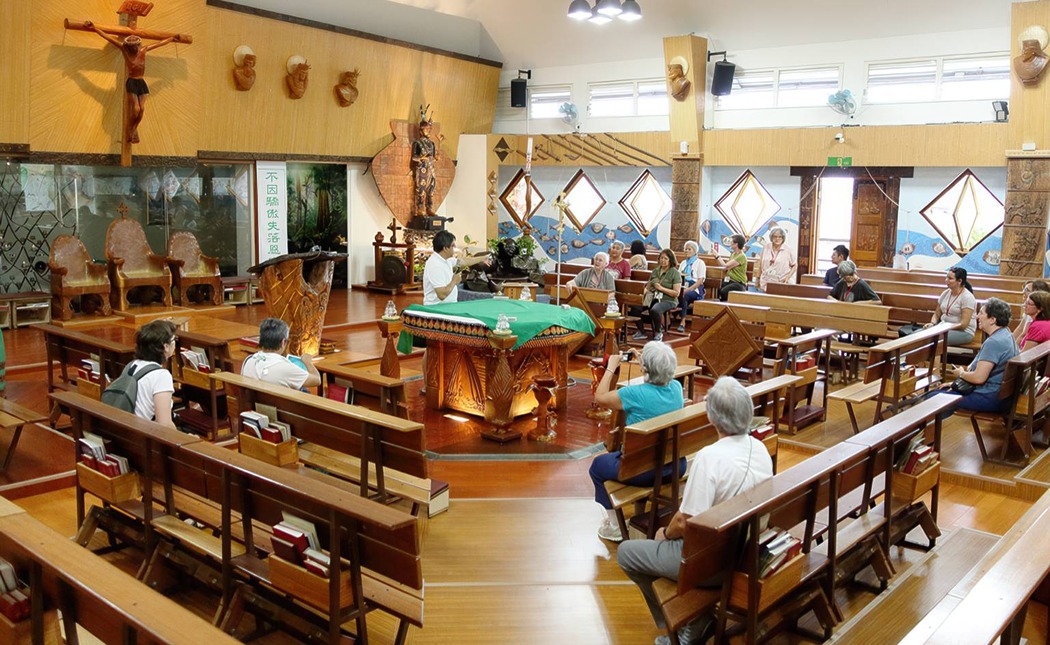
In Taiwan, our Sisters provide a living witness to the love of Christ in a country where fewer than 5% of the population identify as Christian. In Central Taiwan, where many indigenous people reside, Sr. Bernadette runs two centers for children to develop their sense of self and improve their educational opportunities, including a robust ongoing robotics program. During this program, she held a contest for children to build small Lego robots, providing them with a unique opportunity to experience new technology and learn problem-solving skills while working with others.
Sr. Theresa provides counseling support to student advisors at the local Catholic university. She also runs a ministry center that serves as a gathering place for local Bible study and discussion groups on social justice issues, especially as they relate to women. Sr. Angelia, at 101, continues to engage in a powerful prayer ministry and still writes.
SSS in Africa
The Sophia Institute is a new initiative serving women religious across sub-Saharan Africa through accessible theological education, spiritual formation, and leadership development. Founded in Namibia, it offers a blend of online and in-person courses, retreats, and workshops designed to empower women religious in their ministries and communities. Rooted in culturally relevant, story-based theology, the Institute fosters reflection, renewal, and spiritual accompaniment while amplifying the voices, dignity, and lived experiences of African women in the life of the Church.
